A Guide to Intuitively Organize with Zones
Think about walking into Target. You instantly know where to head for toothpaste versus a notepad because the store pairs clear areas with specific inventory. Skincare and haircare live within beauty; cleaning supplies and pet needs within household essentials; cables and chargers within electronics.
While my home isn’t a store, structuring it into functional zones creates that same intuitive ease. In this Minima Journal, I’ll share the Minima Method™ for defining zones, why they make daily routines effortless, and how to map them in your own home using my space as a guide.
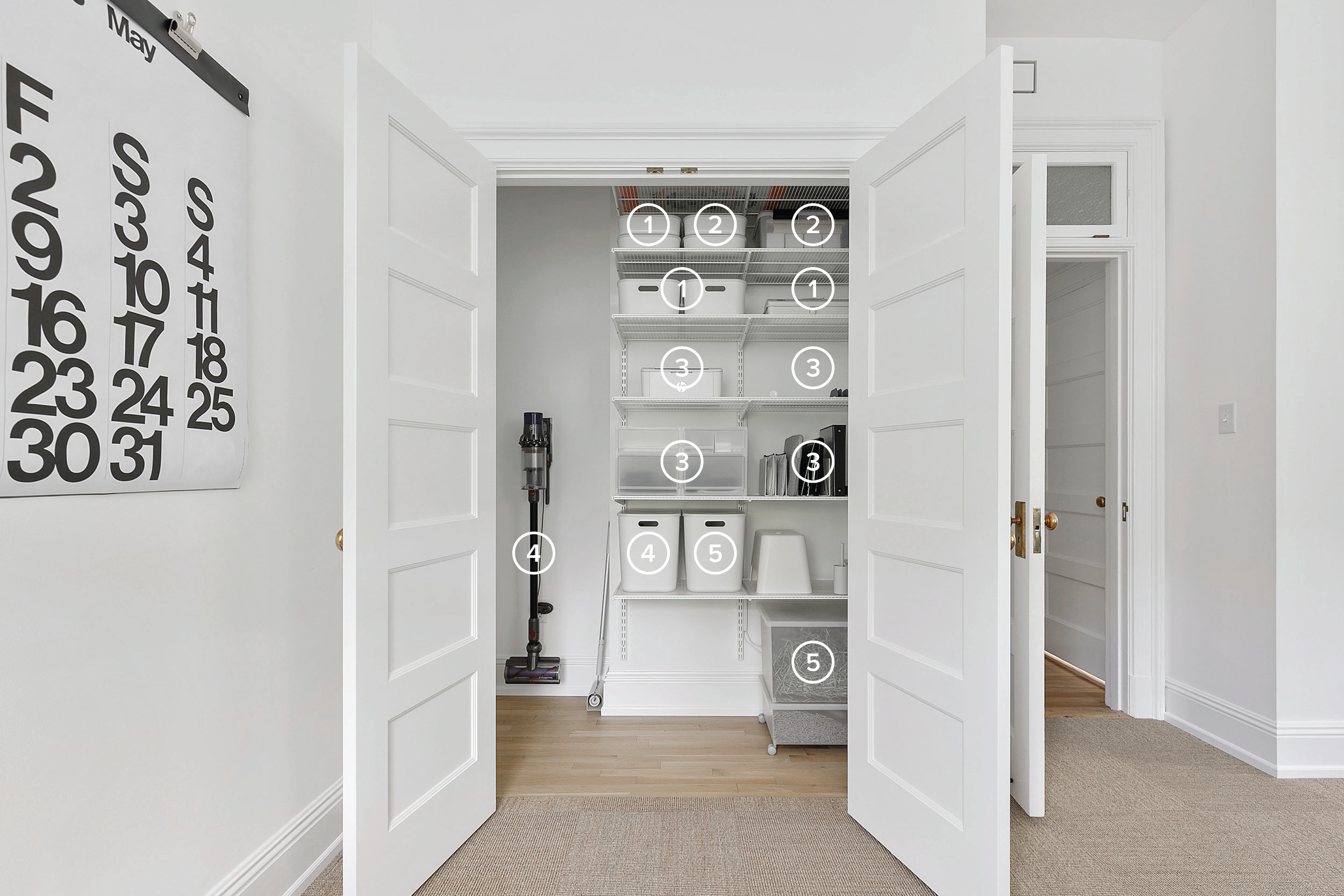
My home office closet zones:
1. Utility
2. Keepsake
3. Office supplies
4. Floor cleaning
5. Pet rabbit care
The concept
A zone is a dedicated area designed to support a specific activity or category—defined by its function rather than the walls of a room. It’s a curated “home within a home.” This might look like an active station for a daily task, like getting dressed, or passive storage for off-season clothing. Whether it’s an entire closet or a single shelf, the key is the boundary; everything in that space must relate directly to the activity or category at hand.
The Minima Method™ approaches zones at two scales: macro and micro. A macro zone centers on a broad category, like utility. Within that zone, you’ll establish micro-zones for specific sub-categories like light bulbs, batteries, and small tools. When deciding where an item should live, consider the broader category it naturally belongs to. This layered approach ensures that even the most obscure belongings have a precise home. (To see how we map these zones in a kitchen, check out “The Minima Method™: Kitchen Organization.”)
The impact
Functional zones prevent clutter in three ways. First, they act as a physical inventory. When items are scattered, it’s easy to lose track of what you own—leading to the “clutter tax” of buying duplicates. Consolidating categories provides immediate clarity; for instance, gathering utility items into a single zone often reveals five pairs of scissors and three rolls of tape. With these essentials visible, you stop buying what you already have.
Second, zones function as spatial boundaries. Unlike methods that rely on containers to hide excess, the Minima Method™ uses the zone as a structural limit. If a space becomes too full, it’s a clear signal to declutter rather than expand. If your tech zone is spilling out of its designated drawer, it’s time to edit your cords rather than dedicating a second drawer to the overflow. This boundary protects the rest of the home from category creep.
Finally, zones provide a roadmap for daily maintenance. When a layout is undefined, a screwdriver on the dining table or mail on the kitchen island never quite finds a home; items simply drift from one surface to another. Defining functional areas makes the daily reset effortless because you are no longer deciding where an item belongs—you are simply returning it to its station.
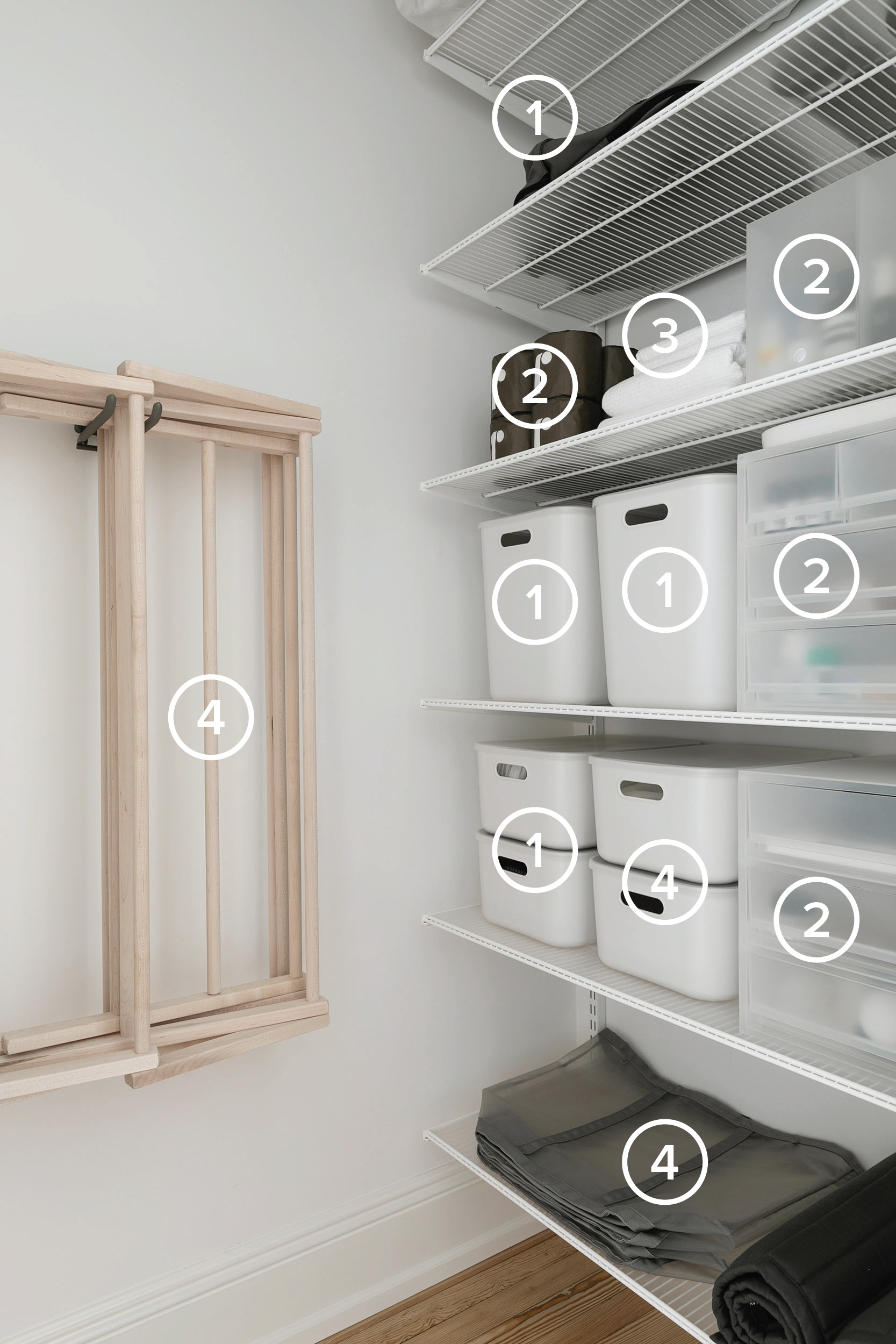
My linen closet zones:
1. Travel essentials
2. Personal care backstock
3. Linen storage
4. Clothing care
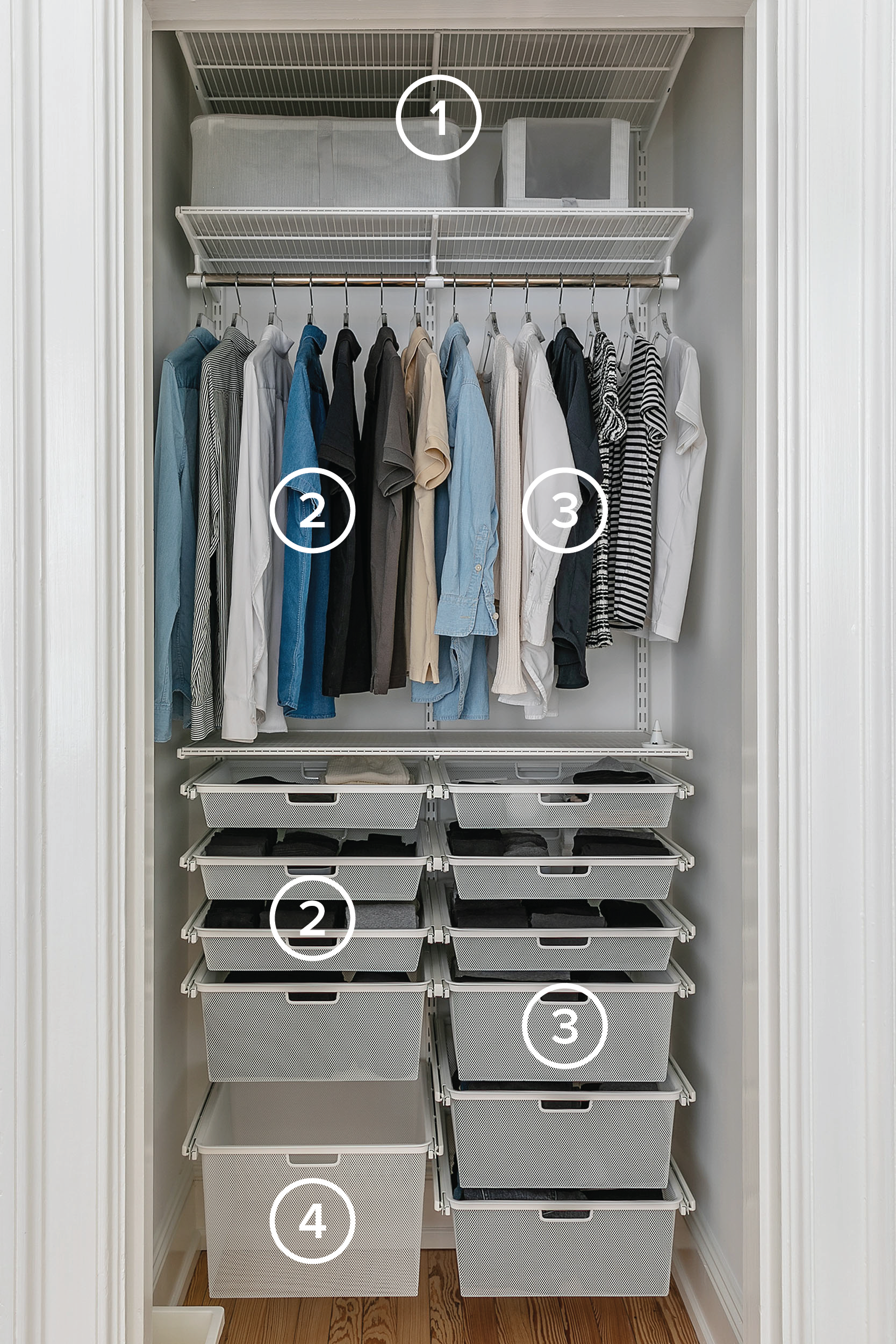
My bedroom closet zones:
1. Off-season wardrobe
2. Jonathan’s wardrobe
3. My wardrobe
4. Laundry collection
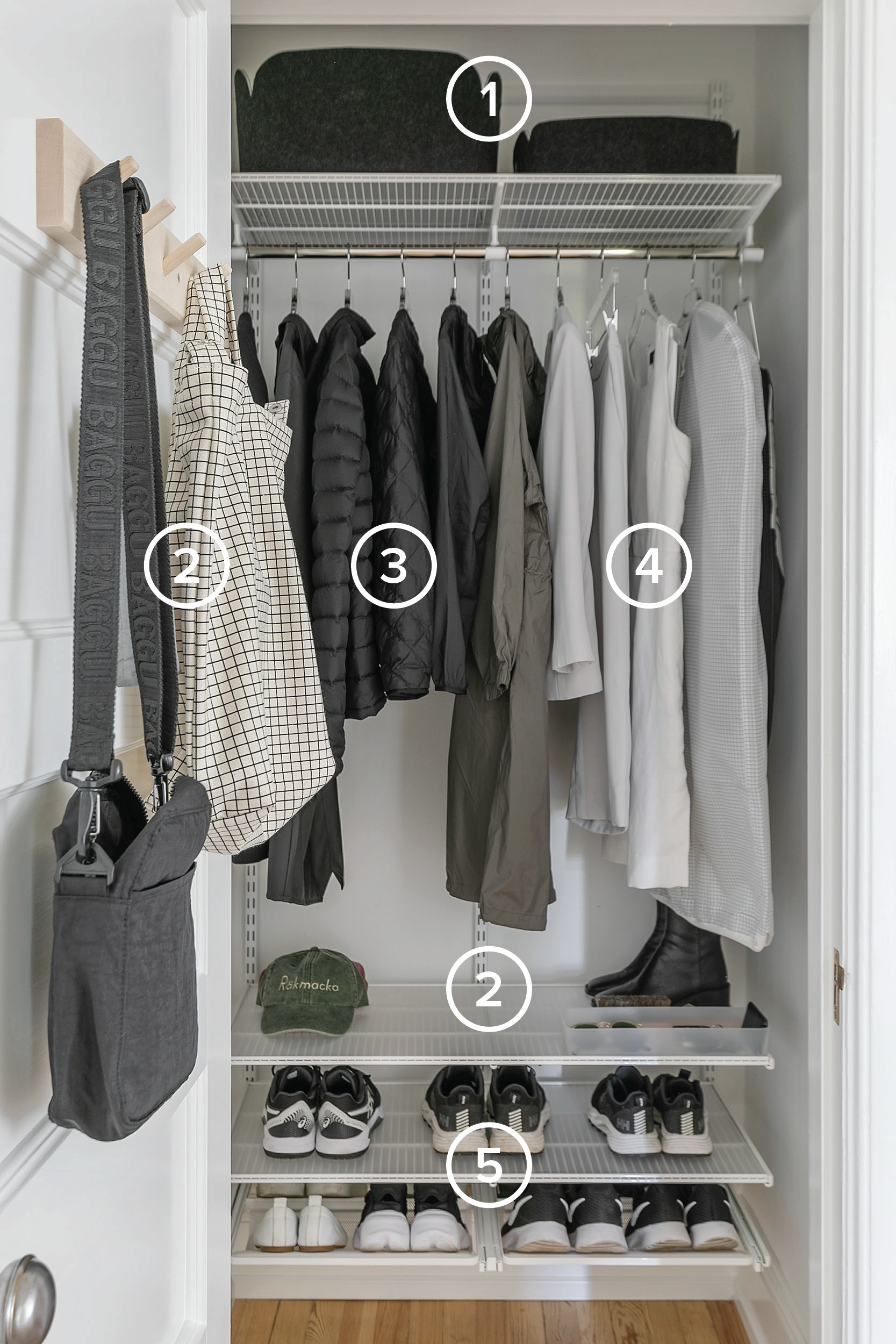
My entryway closet zones:
1. Off-season outerwear
2. Out-the-door essentials
3. Current outerwear
4. Formal wardrobe
5. Shoe storage
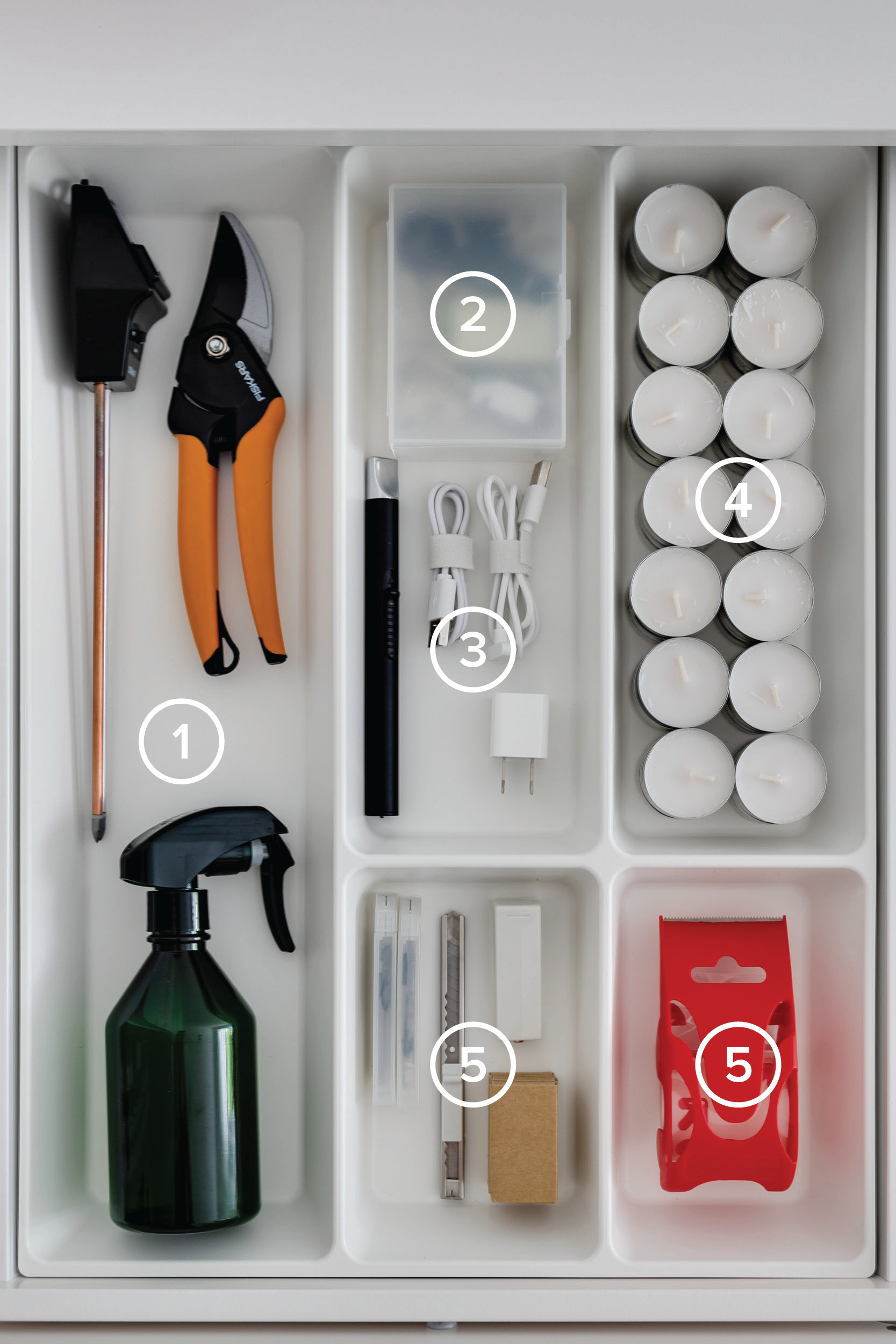
My kitchen convenience drawer micro-zones:
1. Plant care
2. Backup keys
3. Speciality charging
4. Candle lighting
5. Package processing
The application
Implementing this system is a cornerstone of the Minima Method™. When we create an action plan for clients, mapping the home is an essential step to determine where zones should live.
You can define zones in your own space by taking a bird’s-eye view and listing functional categories. Start with the macro zones (clothing, toiletries, utility, paperwork) and then define the micro-zones within. Before moving a single item, try labeling potential zones with Post-it notes; this allows you to visualize the boundaries and test the flow of a space before committing to a final arrangement.
Once your zones are established, declutter each one in its entirety. If you’re going through the kitchen but have backup supplies in the basement, or organizing your wardrobe but have clothing in multiple closets, gather everything together first. Seeing the total volume in one place allows you to make intentional decisions about what to keep.
As you organize, let frequency of use guide the placement within each zone. In a kitchen, everyday dishes should stay within easy reach, while entertaining pieces can live on a high shelf; in a wardrobe, daily staples should occupy prime real estate, while off-season items can be rotated to less accessible spots.
Defining zones is a simple change that creates immediate clarity. When you shift your perspective from organizing belongings to maintaining zones, you stop managing clutter and start managing your life.