Designing for Rest: Interview with Jelena Nikolajevic of Boketto Wellness
My functional medicine practitioner and licensed acupuncturist, Jelena Nikolajevic (MSAc, L.Ac., Dipl. Ac.), has been an invaluable guide for my health since we began working together over two years ago—helping me navigate everything from gut health to sleep quality. Jelena is the founder of Boketto Wellness here in Richmond and has been practicing for 16 years (coincidentally founding her practice the same year I started Minima!).
Over our sessions, she’s taught me so much about how our physical environment directly impacts our nervous system. I’m excited to share a recent conversation we had on why bedroom clutter compromises our rest, how our circadian rhythm shapes sleep, and foundational ways to turn your space into a serene sanctuary.
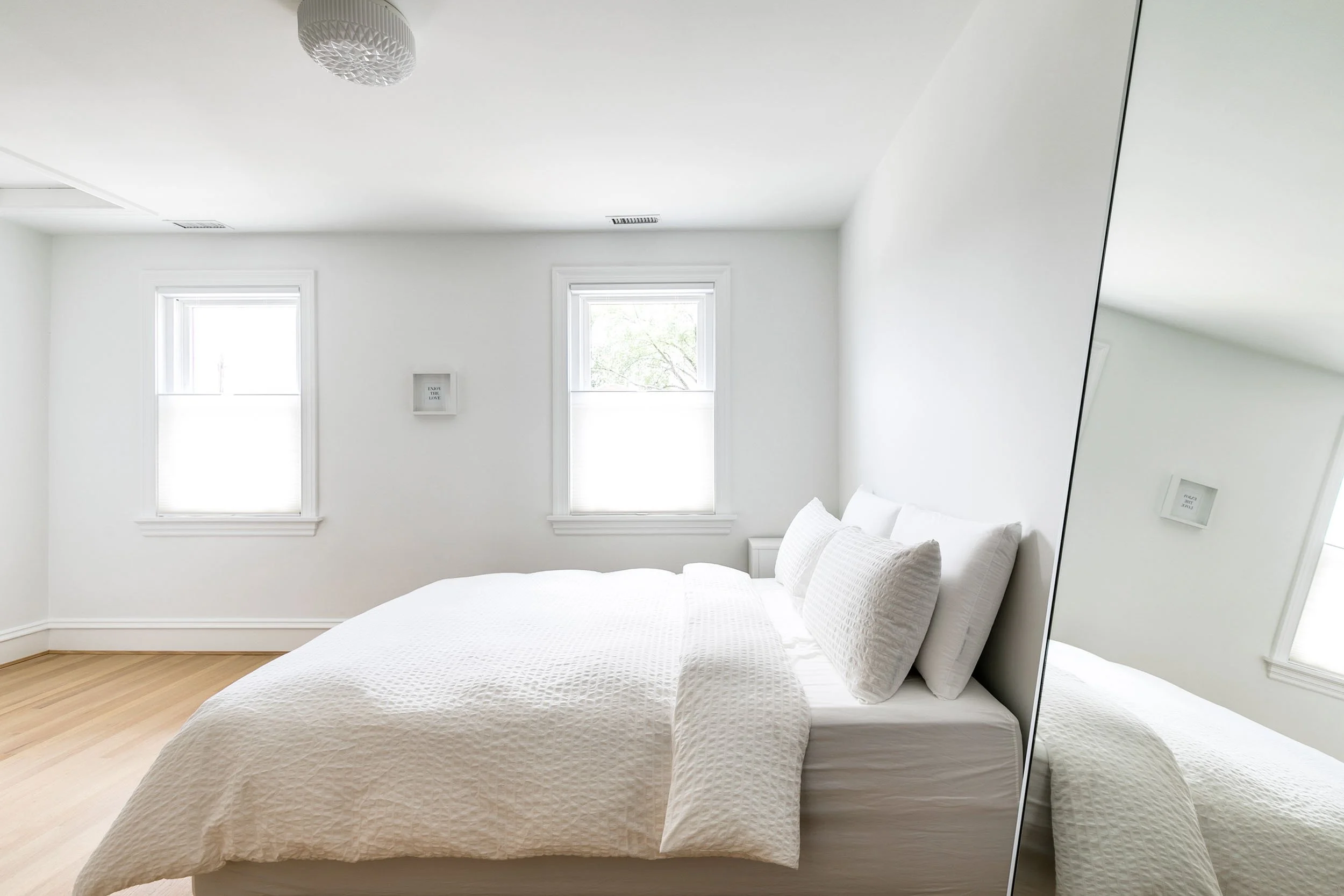
Photo credit Mindie Ballard
Kristen: What is actually happening in our nervous system when we sleep in a cluttered space?
Jelena: What our retina registers has a massive impact on our nervous system because visual noise directly elevates stress inputs and contributes to cortisol dysregulation. In nature, everything is inherently in balance, which is why stepping into a forest instantly calms our nervous system—our eyes register that organic order and feel safe. A cluttered, chaotic room does the exact opposite. It acts as constant visual noise that keeps the brain on subtle alert, signaling to the body that things are out of order.
K: How does Chinese medicine view physical clutter and disorganization in our home?
J: I love the Eastern perspective on this because Chinese medicine views physical clutter as a direct reflection of internal energetic imbalances. For instance, the spleen governs transformation and mental clarity. When Spleen Qi is deficient, it creates an accumulation of “dampness and phlegm” in the body, which manifests externally as mental fog, overwhelm, and an inability to see past physical disorganization. That stagnation often pairs with an imbalance in the small intestine, whose energetic role is to separate the “clear from the turbid”—meaning absorbing nutrients and discarding waste. When someone lives in heavy clutter, that small intestine energy is often off, impairing their ability to discern what to keep versus what to let go.
K: As a functional medicine practitioner and acupuncturist, why do you treat sleep as one of the most fundamental pillars of health?
J: In both functional medicine and Chinese medicine, sleep is the ultimate foundation of health because it is the time when our bodies rest, repair, and literally “clean house.” It sits alongside diet, movement, and stress management as one of the four foundational pillars of overall well-being. During deep sleep, our bodies run on a circadian clock where specific detox pathways become heightened. For example, our cerebral spinal fluid, which connects the brain to the central nervous system, flushes out accumulated daytime toxins to support cognitive function. Similarly, in Chinese medicine, peak liver detox function occurs between 1 and 3 a.m. If we aren’t sleeping deeply, our body loses its essential window to clear out cellular waste and restore parasympathetic balance.
K: You often talk about the autonomic nervous system when discussing sleep. How does that balance work?
J: Our autonomic nervous system has two primary modes: the sympathetic mode (“fight or flight,” which helps us respond to daily tasks and minor stressors) and the parasympathetic mode (“rest, digest, and repair”). Modern life keeps many of us stuck in a state of sympathetic overstimulation throughout the day. Sleep is the primary biological mechanism that locks us into parasympathetic mode, allowing our digestion, vagus nerve, and cellular repair processes to work optimally.
K: You have a fascinating perspective that our evening sleep quality is actually determined by what we do first thing in the morning. How does that work?
J: Our bodies run on rhythm and light inputs. When you first wake up, natural morning sunlight hitting your eyes triggers your Cortisol Awakening Response in a gentle, safe progression. That early UVA sunlight also signals your gut to activate leptin, the hormone regulating satiety, and stimulates nitric oxide production to support cardiovascular health. If your very first input in the morning is a blue light screen or artificial overhead lighting—paired with skipping breakfast and drinking coffee on an empty stomach—you shoot your cortisol from 0 to 60. That sets off a downward spiral of feeling “wired and tired” all day, making it nearly impossible to wind down at night.
K: How does morning light tie directly into evening melatonin production?
J: Sunlight exposure during the day sets the internal timer for melatonin production later. As the sun sets and light decreases, cortisol naturally dips, and melatonin kicks in. Melatonin isn’t just a sleep hormone; it is our master antioxidant. During shorter winter days when natural sunlight is limited, embracing early evening darkness allows melatonin to rise and act as a powerful cellular protector, taking on a similar protective role to vitamin D.
K: What simple morning habit shift do you recommend for better rest?
J: Before looking at your phone, checking emails, or turning on bright overhead lights, step outside for 10 to 30 minutes to look up at the natural sky. If you can’t catch the exact sunrise, getting natural daytime sky exposure before staring at a screen is still incredibly impactful for resetting your circadian clock.
K: What are the elements of an environment designed for deep, restorative sleep?
J: Your bedroom should feel like a cool, dark sanctuary. Keeping evening lighting low—ideally below 10 lux once the sun sets—signals to the nervous system that it is time to rest. Avoiding harsh overhead lighting in favor of warm, dim lamps or even beeswax candles helps support pineal gland health. Temperature is equally essential; our bodies are wired to sleep as temperatures drop, so keeping the room cool or opening windows for fresh air lowers your core body temperature to trigger sleep. Pairing that with breathable, natural fiber bedding like linen, organic cotton, or silk prevents night overheating, while a clean air filter purifies the space and provides gentle, consistent white noise.
K: What should we keep OUT of the bedroom?
J: Televisions and bright devices. Needing a TV on to fall asleep is usually a sign of nervous system dysregulation, where the brain has been conditioned to rely on distraction to power down. Keeping phones, screens, and non-native EMF sources away from your sleeping space removes high-frequency noise and prevents the temptation to check emails or consume news first thing in the morning.
K: For someone feeling overwhelmed by their space or sleep routine right now, what are a few simple starting points to try tonight?
J: You don’t need to buy expensive products or take dozens of supplements to get better rest. Take five to ten minutes before bed for a quick spatial reset; clearing the kitchen sink, folding loose clothes, and putting away visual clutter allows you to wake up to a clear space that calms your nervous system. Try charging your phone in another room or setting it to airplane mode so you can reclaim your morning window before checking notifications. In the evening, dim your lights after sunset by turning off overhead fixtures and using low-placed lamps or red-light display settings on your devices. Finally, a warm bath or shower before bed combined with topical magnesium on your neck or shoulders naturally cools your core body temperature and releases physical muscle tension.
A special thank you to Jelena for sharing her expertise and insights with us! If you are interested in working with Jelena for functional medicine or acupuncture, you can learn more and book an appointment through her practice at Boketto Wellness.