Minimalist Living with Kids: Inside a 600-Square-Foot Home
Living in 600 square feet and keeping things tidy with two young children is a next-level challenge, yet Alison Mazurek’s Vancouver home feels completely natural—never forced or staged. In this Minima Journal interview, she shares photos of her home and weighs in on what minimalism with kids actually looks like in practice.
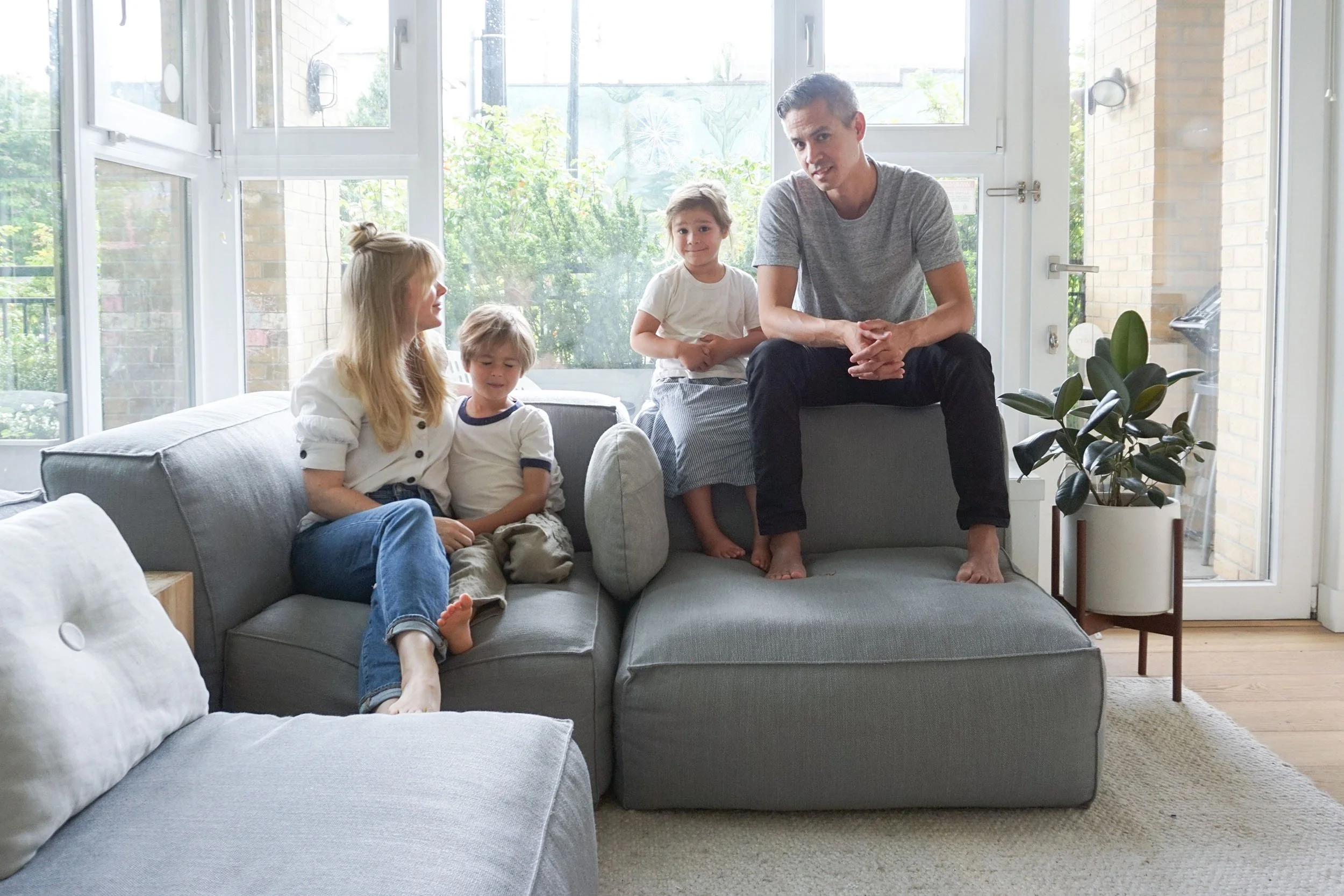
Alison and her family at home
Kristen: How long have you lived in your home and who do you share it with? Tell us a little bit about your home size and layout.
Alison: We’ve been in our home for 11 years now. It’s a 600-square-foot, one-bedroom apartment that my husband, our two children—ages seven and four—and I share. Our apartment is essentially a box with high ceilings and big windows. There’s a door on the bathroom and two sliding doors to the bedroom. The open layout is part of what makes small living possible for us, but it’s also one of the biggest challenges, as an open floor plan can look cluttered very easily.
K: When and how did you decide to stay in your current home rather than moving to a larger space as your family grew?
A: Part of our decision to stay was because of the outrageous cost of housing in Vancouver, but it was also a commitment to living with less and owning fewer things. After having our first baby, everyone said we had to move to a bigger space, which made us dig in and refuse to leave our walkable city life. As we added a second child, we continued to learn what we truly need to be content—and it’s not much. We never thought we’d still be living here with a seven- and four-year-old, but here we are!
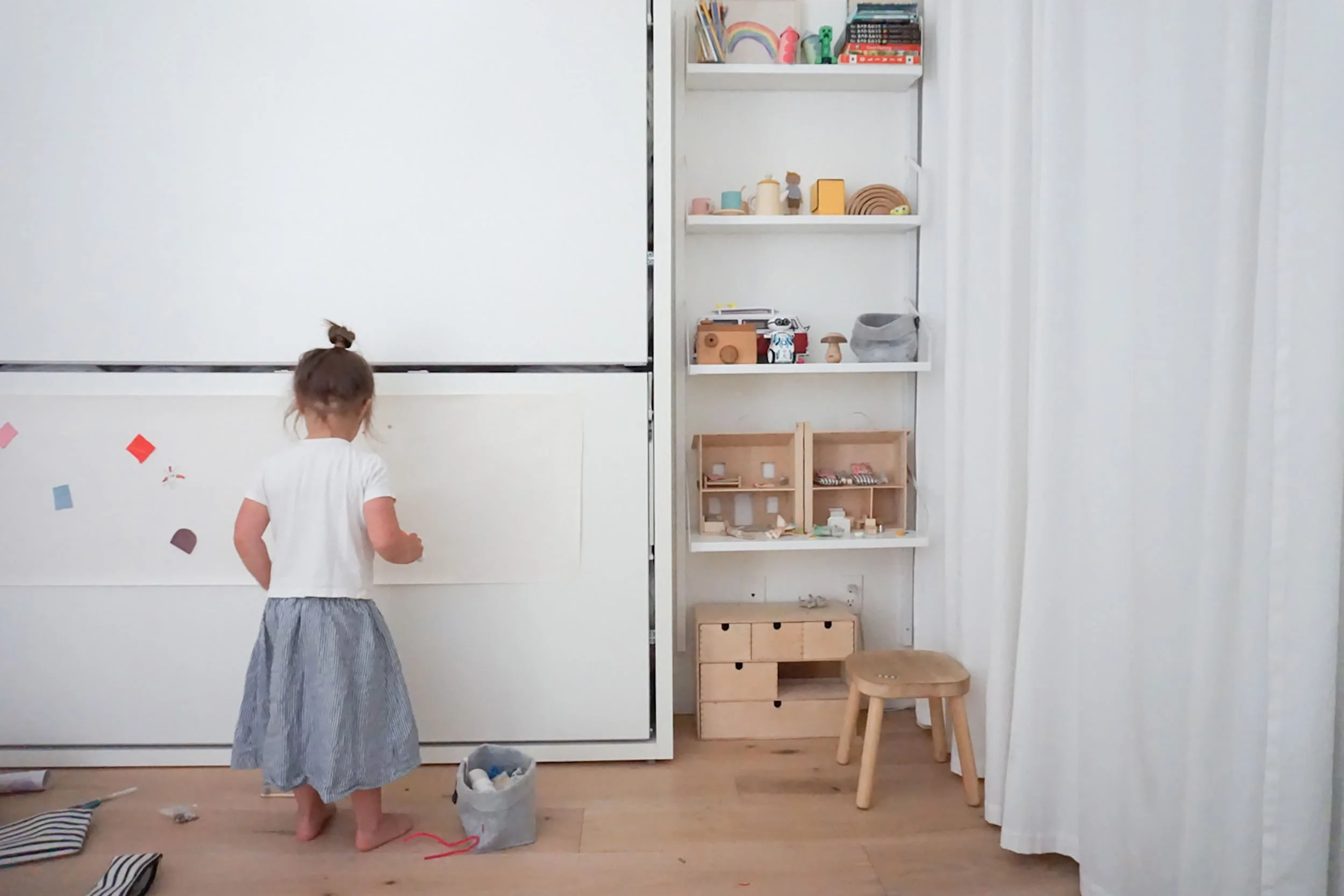
Space-saving Kali Duo fold-down wall bunk beds, doubling as an art board during the day
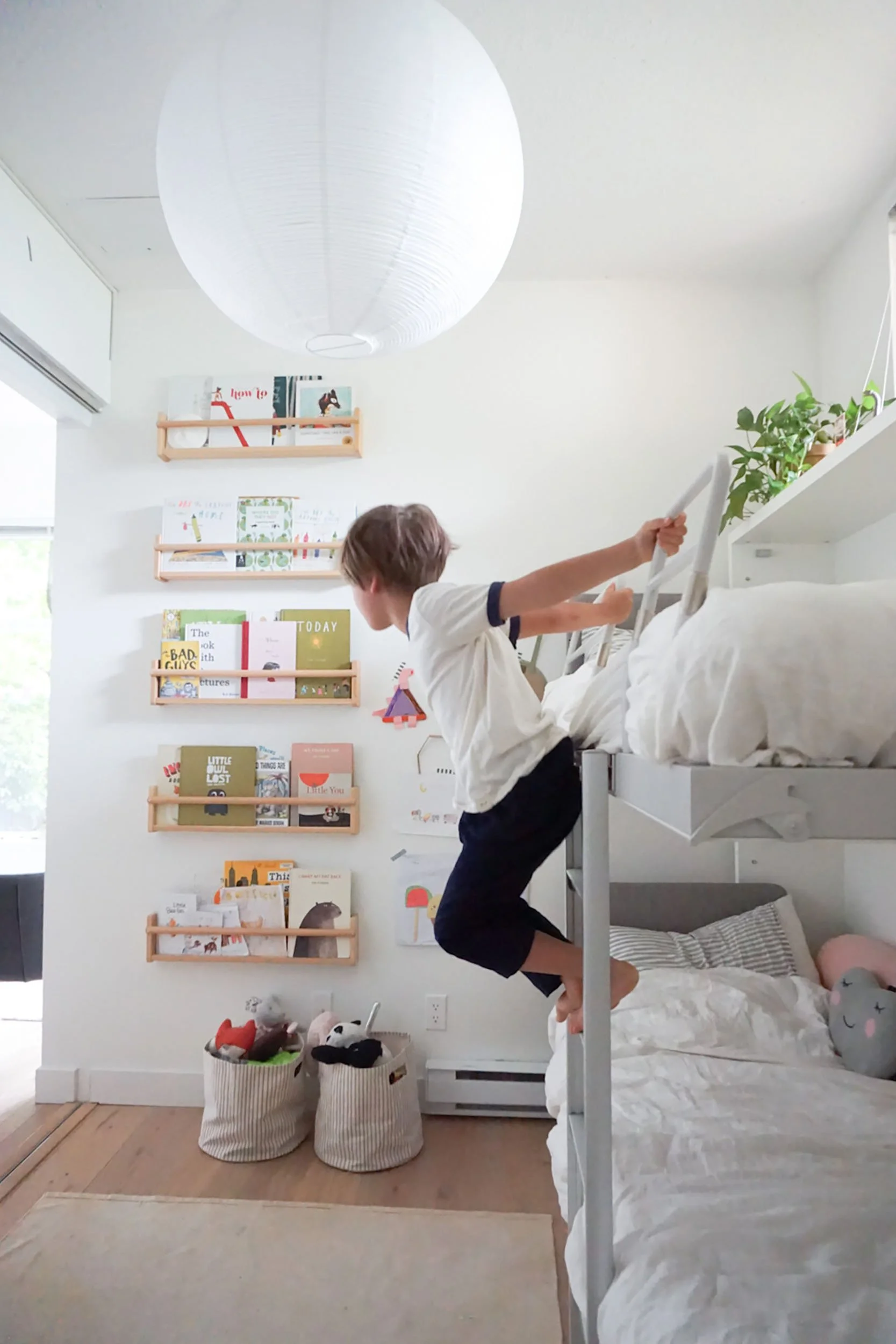
Kali Duo wall bunk beds folded out for sleeping
K: How much are your children involved in the decision-making process when it comes to minimizing and organizing? Do they have fun with it, or do you see resistance?
A: We’ve involved them from a young age, often reminding them when they haven’t played with a toy in a long time that it might be time to pass it along to another child. Every couple of months, we ask them to go into their room and choose three to five toys they no longer play with to share with friends or donate. When they resist cleaning up, I remind them that if it’s too much to care for, we likely have too many things. It honestly gets harder as they get older and compare what they have to other kids. We aren’t extreme minimalists, but I love how our space naturally limits our consumption. It took me a long time to learn that things don’t make me happy, so whenever I feel a bit of guilt about what my kids don’t have, I remember that teaching them to value experiences and relationships matters most.
K: What does your laundry routine look like? Do the kids help with washing and folding?
A: Oh, laundry. We generally try to tackle it once a week barring any disasters, doing a few loads at once. We use our dryer for some items and hang the rest on a drying rack in the bathtub with the fan running. I highly recommend placing your drying rack in the bathroom in a small space, as hanging laundry anywhere else gets in the way very quickly. Then, we pile all the clean clothes in the living room to fold. A silver lining of lockdown was realizing the kids could help out more around the house, so I am starting to get them involved with sorting and putting their clothes away.
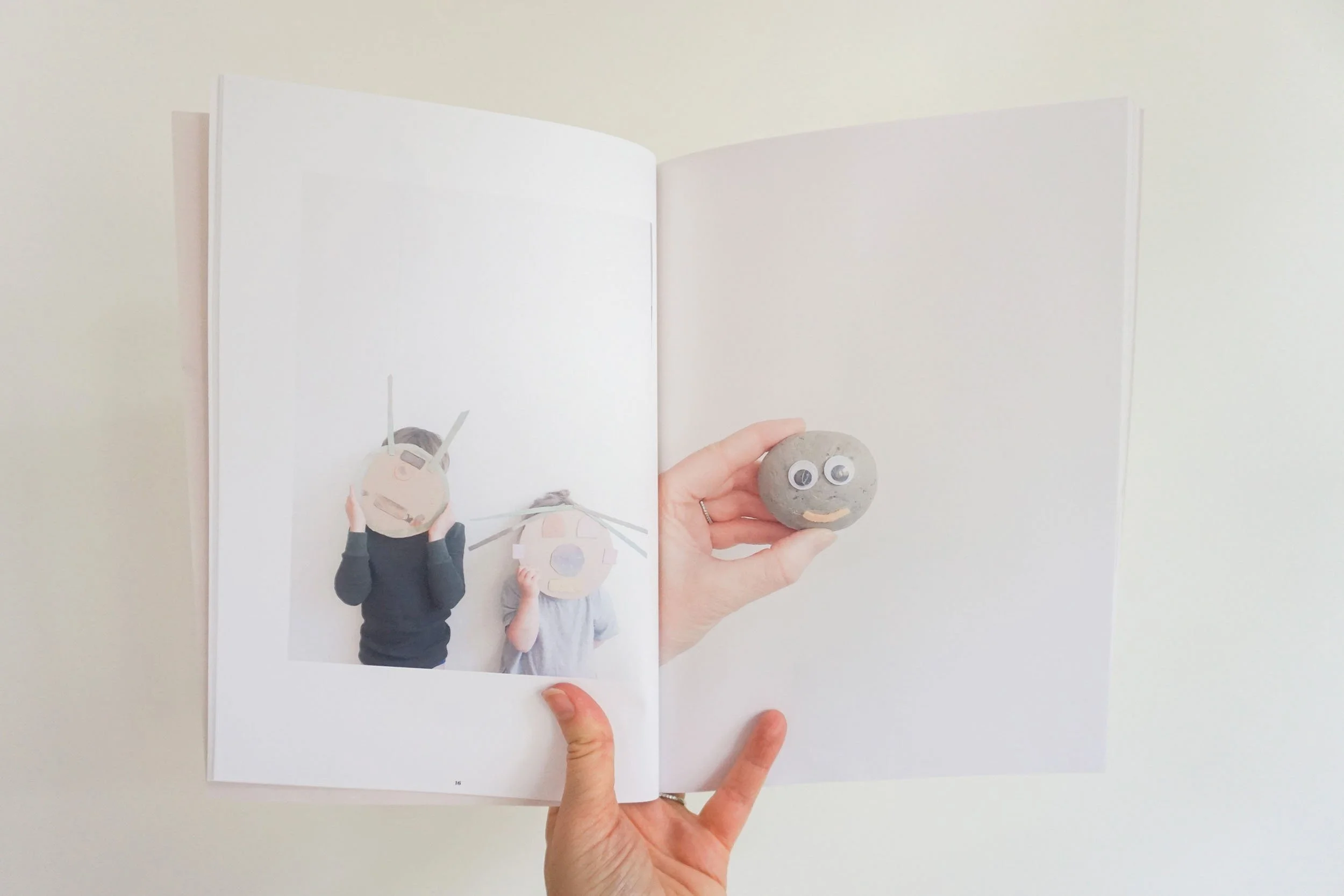
Kids’ keepsake book
K: How do you process children’s keepsakes such as schoolwork, artwork, crafts, and baby mementos?
A: I don’t hold onto many mementos. I’m much happier seeing baby clothes and accessories passed on to friends and family so they can have a second life on other cute babies. I take tons of pictures of my kids so those memories suffice rather than keeping physical objects we don’t have room for. For artwork and special schoolwork, I found a system I really love: I take photos of their creations and print a softcover art book. It honors their work and becomes a special keepsake, while the actual paper gets recycled and out of our space.
K: With the holidays coming up, how do you handle conversations around physical gifts with friends and family?
A: Because we’ve been living small for a while, our friends and family are pretty respectful. Most of our friends live in small spaces too, so we tend to buy consumables or simply spend time together instead of exchanging gifts. If you are just starting out, I recommend having an honest conversation with family members who tend to over-gift. The best presents are often experiences like passes to the aquarium, science center, botanical gardens, or an ice cream shop gift card. I’m also always happy to receive everyday essentials the kids need, like water bottles, rain boots, or sweatshirts, so I let gift-loving family members know those practical needs—ideally from small or local shops.
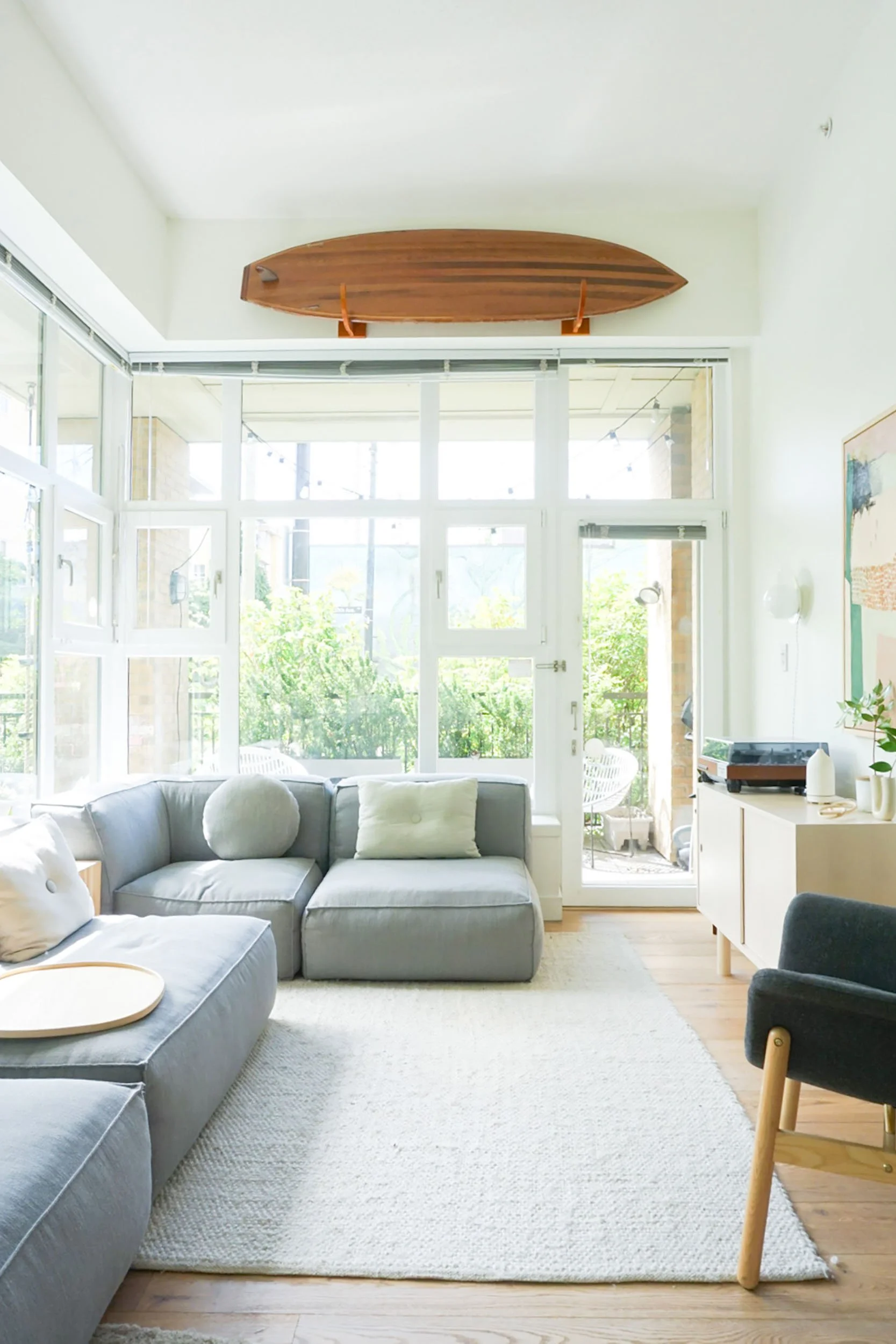
Flexible modular seating in the living area
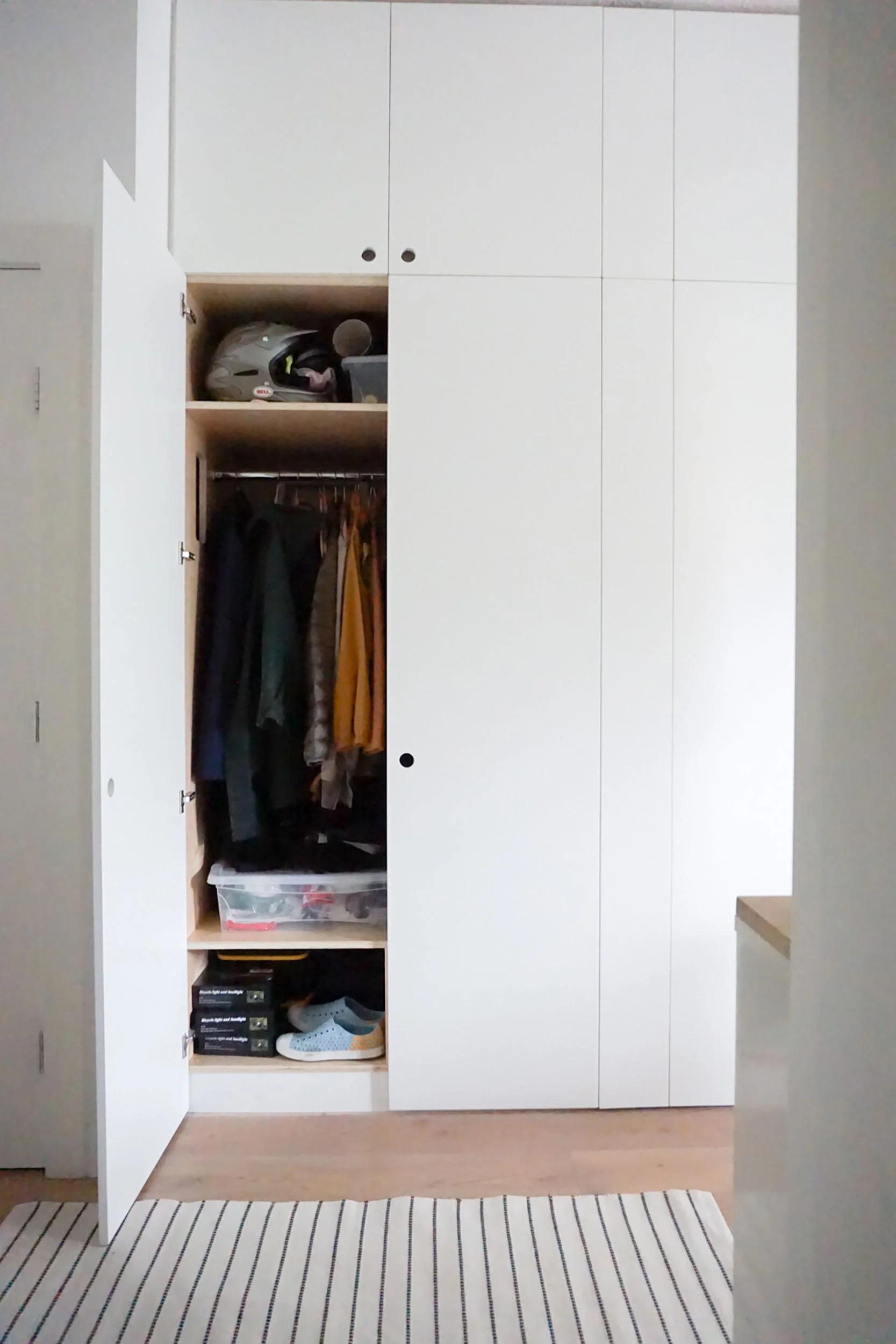
Built-in entry wall storage for coats and outerwear
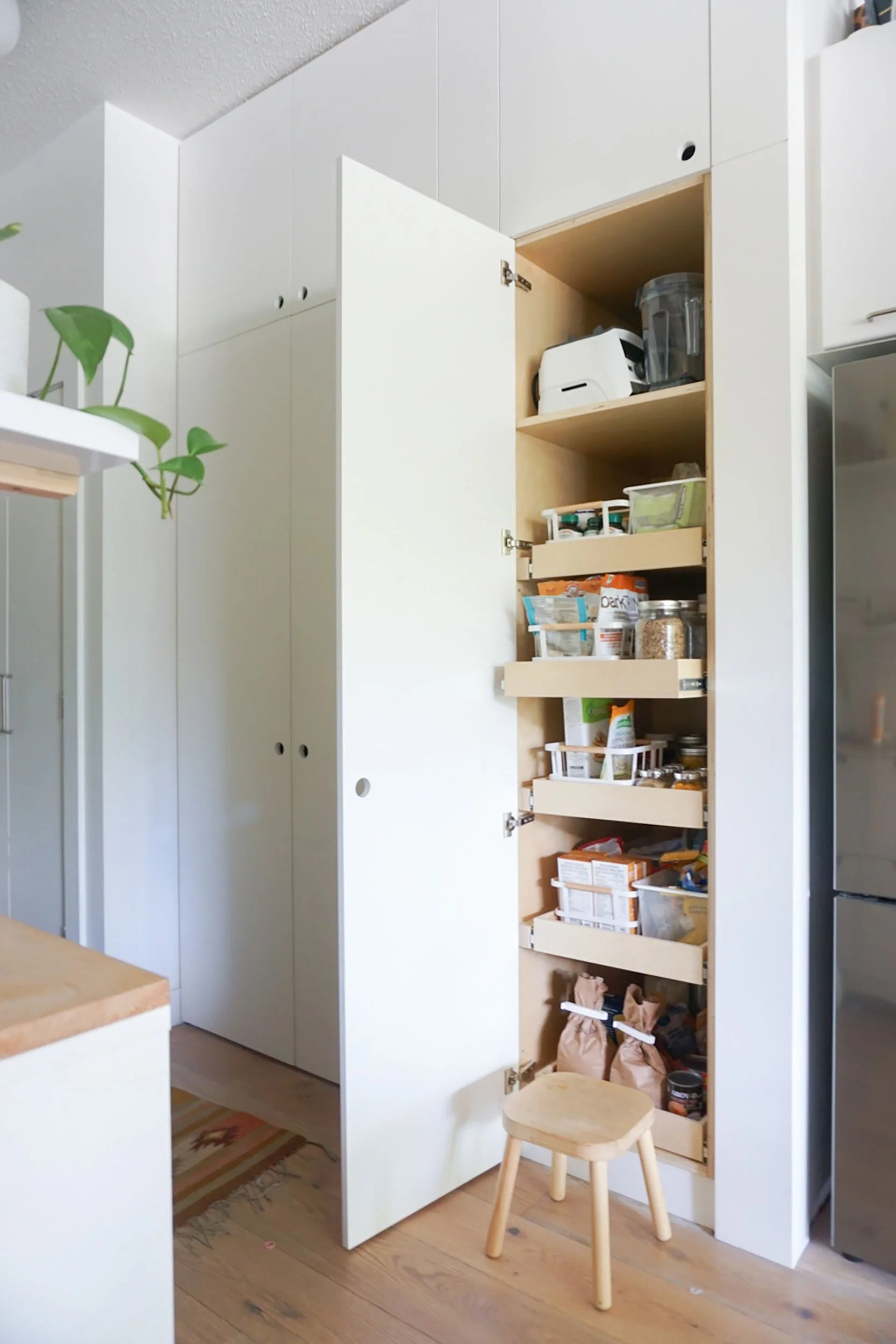
Built-in storage extending into the kitchen and pantry
K: How has COVID shifted your relationship with your space?
A: Hmmm... COVID has shifted everything, and in some ways, nothing at all, hasn’t it? Some days I have felt suffocated by our space, the constant tidying, and the noise! Other days, I am so grateful for a small footprint that let me stay home during lockdown and worry about money a little bit instead of a lot. I worry about the winter and how we will stay safe and sane without the indoor activities we used to rely on, but I know we will find our way through it. I’ve questioned city living when we can’t hang out in coffee shops, restaurants, or community centers with ease. But those weren’t the only reasons we live here—it’s for a walkable life, a smaller carbon footprint, friends a few blocks away, and access to beaches and mountains. More than anything, COVID has made me appreciate friendships and family. If we are all together and healthy, even in a small space, everything will be alright.